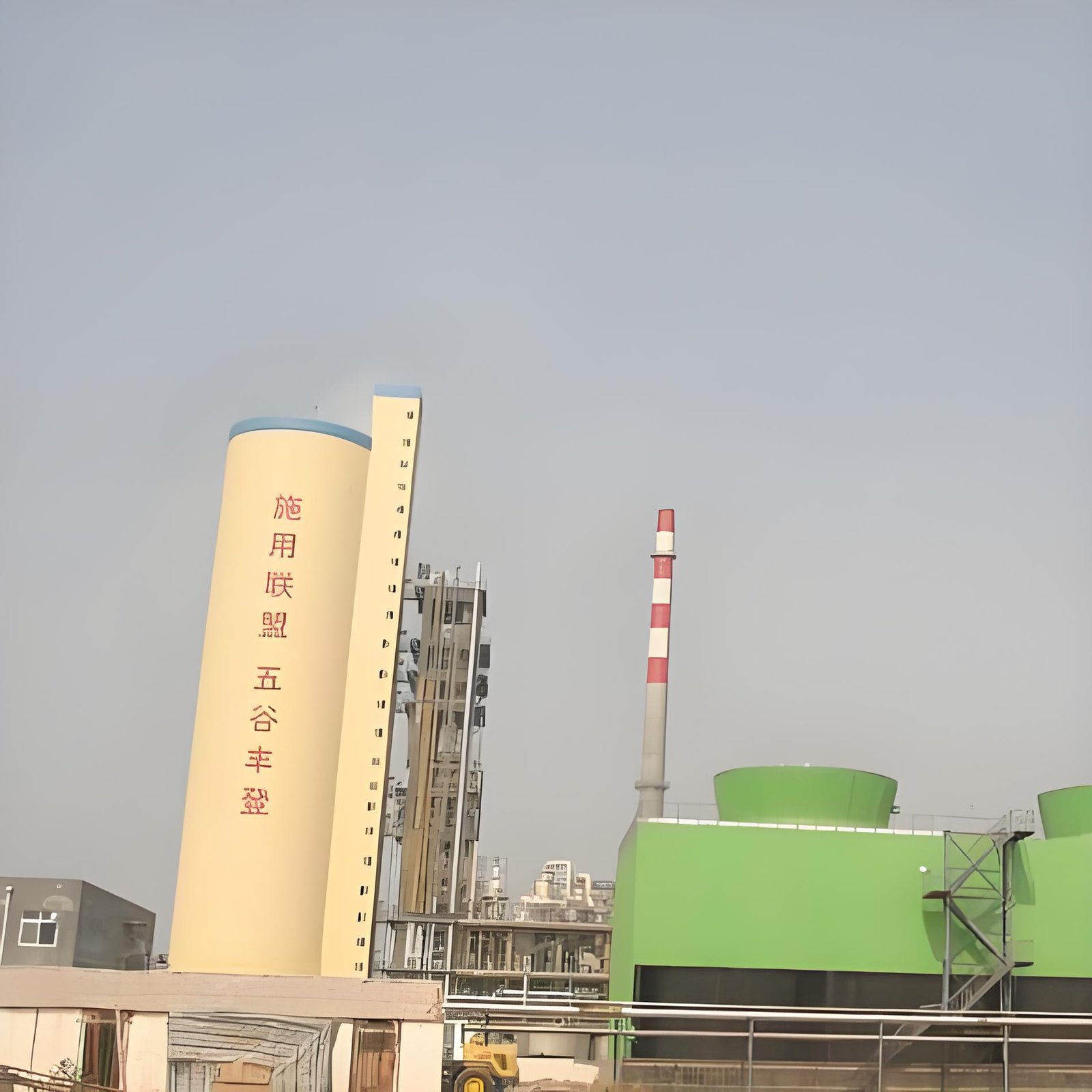
The overall system consists of:
Air drying system
Sulfur melting and burning furnace
Converter (oxidation tower)
Absorption tower
Waste heat boiler / Steam generation system
Auxiliary heat recovery and process control systems
Brief Process Description
1. Sulfur Melting and Combustion
Solid sulfur is first heated in a melting tank to produce liquid sulfur. The molten sulfur is then pumped and atomized into the sulfur-burning furnace, where it reacts with oxygen in dry air to form sulfur dioxide (SO₂).
Main reaction:
S + O₂ → SO₂
This reaction is highly exothermic, and the furnace temperature typically exceeds 1000°C. The released heat is recovered through a waste heat boiler to generate steam for plant use, improving overall energy efficiency.
2. Catalytic Oxidation of Sulfur Dioxide (Conversion Stage)
The high-temperature SO₂ gas from the furnace is cooled through a waste heat recovery system and then enters the converter (oxidation tower).
In the presence of a catalyst (typically vanadium-based), sulfur dioxide reacts with oxygen to form sulfur trioxide (SO₃).
Main reaction:
SO₂ + 1/2 O₂ → SO₃
This is a reversible exothermic reaction. Multi-stage catalytic beds with intermediate cooling are used to achieve high conversion efficiency and optimize equilibrium conditions.
3. Sulfur Trioxide Absorption
The produced SO₃ gas enters the absorption tower, where it is absorbed by concentrated sulfuric acid (typically 98.3%).
Main reaction:
SO₃ + H₂O → H₂SO₄
Under controlled conditions, oleum (fuming sulfuric acid) can also be produced if required.
Efficient absorption design ensures:
Project Highlights
✔ Annual output of 200,000 tons of industrial sulfuric acid
✔ Efficient heat recovery and steam generation
✔ High SO₂ conversion rate
✔ Stable continuous operation
✔ Environmentally compliant emission control
After commissioning, the system has been operating smoothly, meeting all design parameters and delivering reliable, energy-efficient sulfuric acid production.