
Fully Welded Plate Heat Exchanger Inside Welding Process at Tershion Workshop
Automated welding ensures structural integrity, corrosion resistance, and long-term pressure stability in fully welded plate heat exchanger production.
This welding arm is used in the production of fully welded plate heat exchangers, ensuring precise and consistent welding along all critical joints.
In industrial environments, welding quality directly determines equipment reliability and service life.
Each unit is manufactured under strict process control from welding to final assembly.
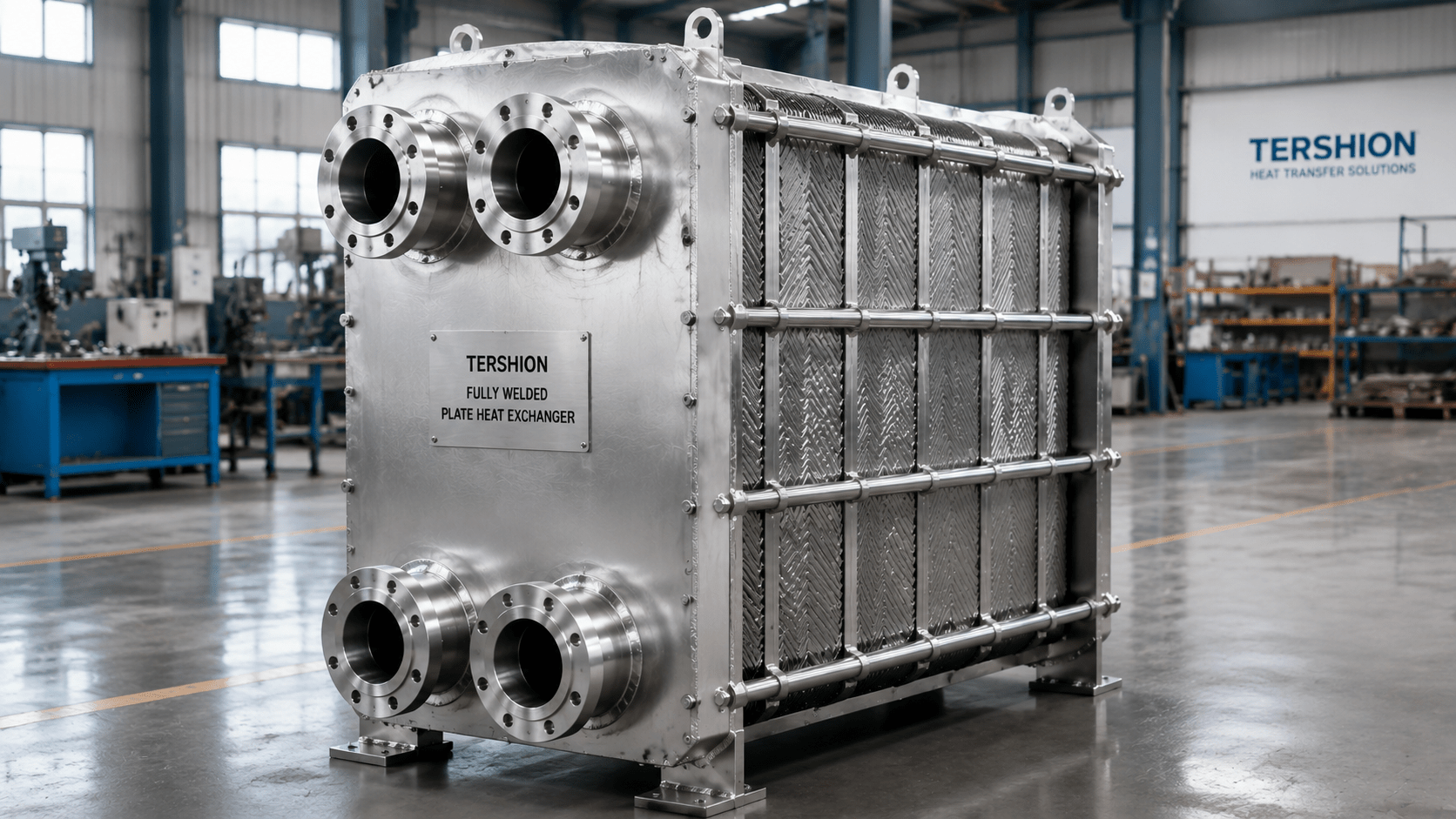
Why Welding Quality Matters
In fully welded structures, welding performance affects key industrial factors:
- Pressure resistance under high-load conditions
- Corrosion resistance in chemical environments
- Long-term operational stability
From Welding to Final Assembly
After welding, each heat exchanger undergoes strict inspection and pressure testing before delivery to ensure reliability in real industrial conditions.
Industrial Applications
Fully welded plate heat exchangers are widely used in:
- Chemical processing systems
- High-pressure heat transfer applications
- Corrosive fluid environments
Conclusion
The performance of a fully welded plate heat exchanger is defined during manufacturing — not after installation. Precision welding ensures long-term stability and safe operation.
About Tershion
We specialize in plate heat exchangers and fully welded solutions for demanding industrial environments, focusing on durability, efficiency, and engineering precision.