
News
Heat Transfer Efficiency of Plate Heat Exchangers
Heat exchangers play a vital role in modern industry. As essential thermal equipment, they are widely used in chemical processing, petroleum, power generation, food manufacturing, and many other sectors. In chemical production, they function as heaters, coolers, condensers, evaporators, and reboilers.
Based on heat transfer principles, heat exchangers are generally classified into three categories:
Surface (indirect) type
Direct contact (mixing) type
Regenerative type
Among them, the surface type is the most commonly applied in industrial systems.
Heat Transfer Coefficient Comparison
The overall heat transfer coefficient is a key indicator of a heat exchanger’s thermal performance. Under the same operating conditions, different structures exhibit different heat transfer efficiencies.
For steam–water heat exchange:
Shell-and-tube heat exchanger: 1500–3000 W/m²·°C
Plate heat exchanger: 2000–4000 W/m²·°C
For water–water heat exchange:
Shell-and-tube heat exchanger: 2500–4000 W/m²·°C
Plate heat exchanger: 3000–5000 W/m²·°C
These figures demonstrate that plate heat exchangers typically provide higher overall heat transfer coefficients compared to conventional shell-and-tube designs.
Why Plate Heat Exchangers Achieve Higher Efficiency
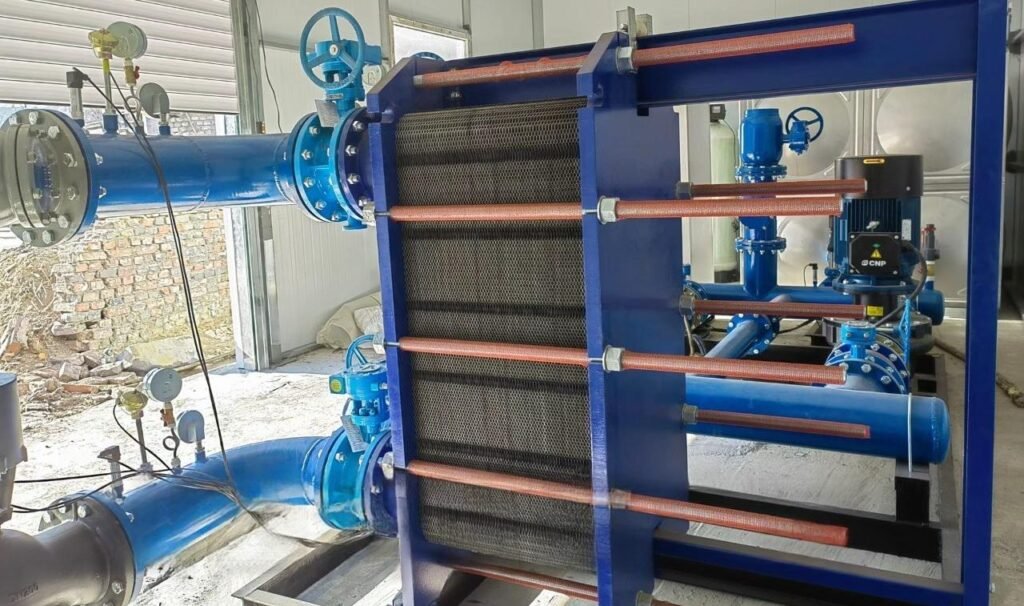
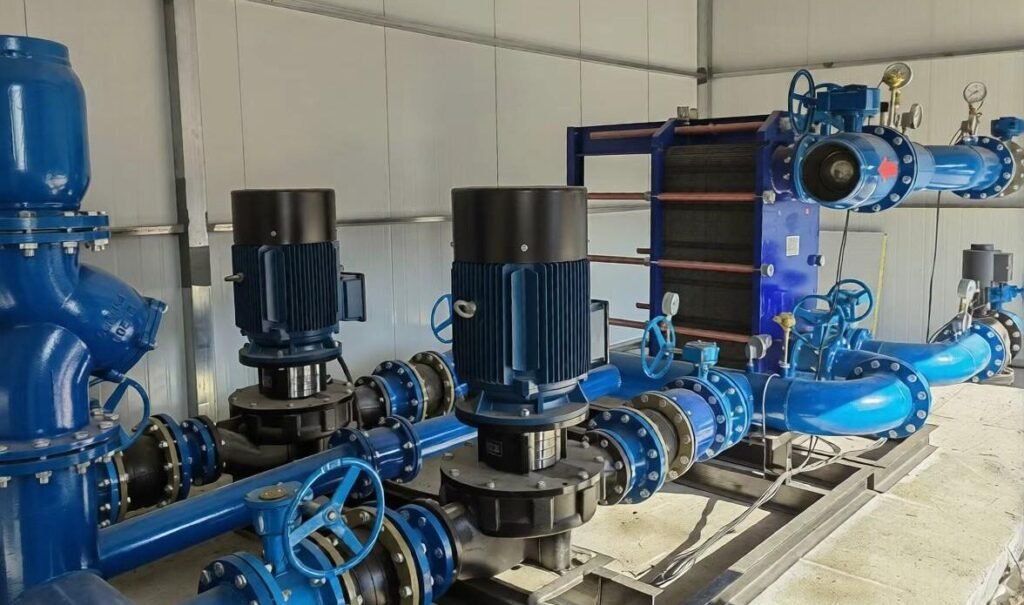
The superior performance of plate heat exchangers is mainly due to their structural design:
Thin corrugated metal plates (0.5–0.7 mm) significantly reduce wall thermal resistance
Counter-current flow arrangement maximizes temperature difference
Narrow, multi-channel flow paths promote turbulence and reduce liquid film resistance
Minimal fouling resistance due to smooth plate surfaces
No bypass flow, unlike traditional shell-and-tube structures
Because of these features, the heat transfer coefficient of plate heat exchangers is generally 1–2 times higher than that of shell-and-tube heat exchangers under comparable conditions.
Can Heat Transfer Efficiency Reach 100%?
In theory, heat transfer efficiency is defined as:
Efficiency = Heat released by hot medium ÷ Heat absorbed by cold medium
The closer these two values are, the higher the efficiency. In well-designed plate heat exchangers, the transferred heat approaches thermal balance, meaning:
Heat transferred ≈ Heat released ≈ Heat absorbed
Therefore, plate heat exchangers can achieve heat transfer efficiency very close to 100% in practical applications.
In actual engineering design, however, an appropriate safety margin is always considered to compensate for potential fouling over long-term operation, ensuring stable and reliable system performance.